
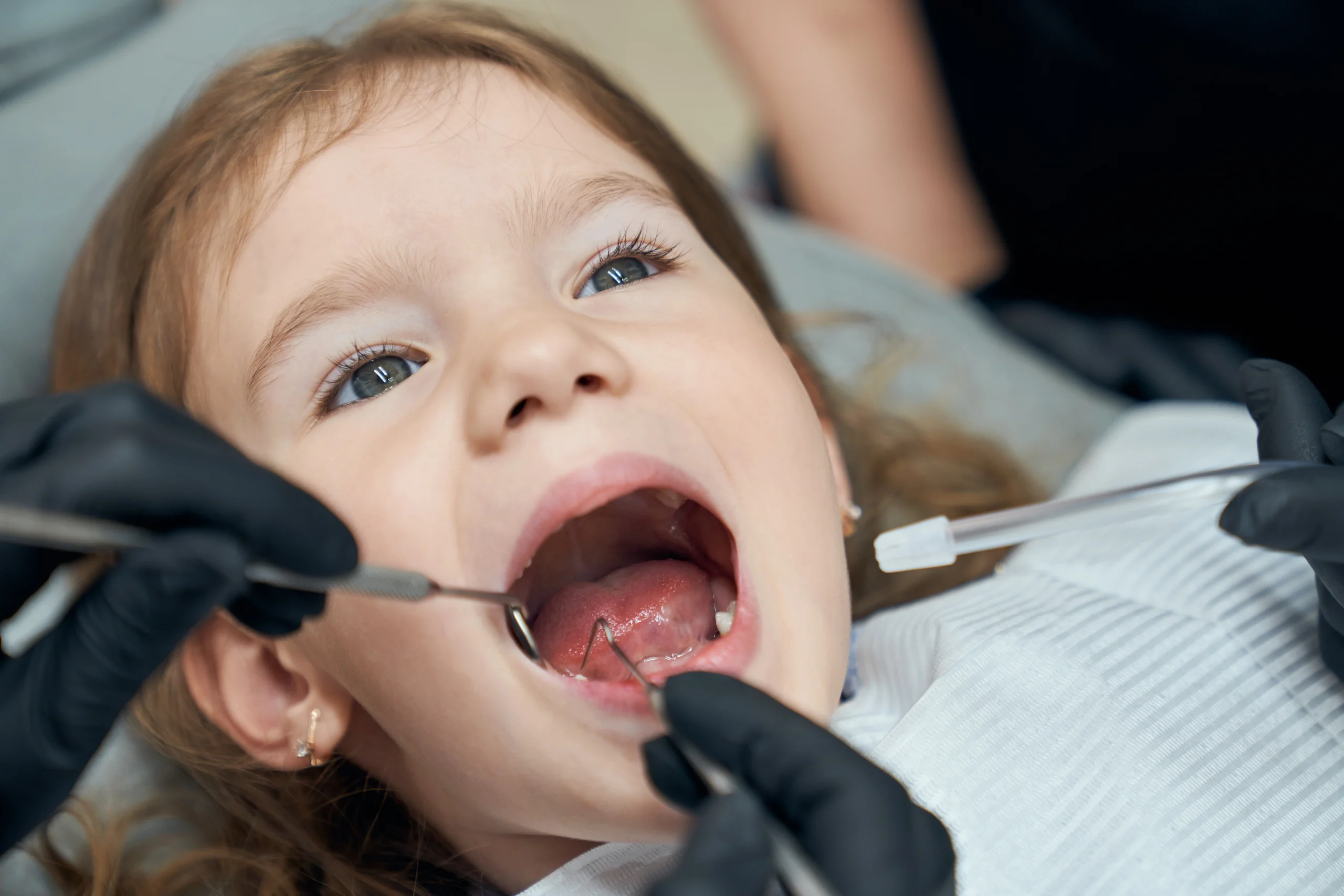
Many parents assume orthodontics treatment doesn’t begin until the teenage years. While braces often aren’t needed until later, the Australian Society of Orthodontists recommends that children have their first orthodontics assessment by around age seven.
This doesn’t mean your child will need braces at seven. Instead, it gives your dentist the opportunity to identify developing bite, jaw, and spacing issues while your child’s mouth is still growing. In many cases, no treatment is needed only regular monitoring. However, identifying certain problems early can make treatment simpler, shorter, and more effective if intervention is required.
If you’ve noticed crowded teeth, thumb-sucking, mouth breathing, or an uneven bite, an orthodontics assessment can provide reassurance and help determine whether any action is needed.
Why Is Age Seven Recommended?
Around the age of seven, children typically have a combination of baby and permanent teeth, known as mixed dentition. By this stage, the first permanent molars and front teeth have usually erupted, allowing dentists to evaluate:
- How the upper and lower jaws fit together
- Whether there is enough room for permanent teeth
- Early signs of crowding or spacing issues
- Bite development, including overbite, underbite, crossbite, and open bite
- Jaw growth and facial development
This stage provides valuable information because the jaws are still growing, making some orthodontic problems much easier to manage than they would be during adolescence.
The good news is that most children assessed at age seven won’t need immediate treatment. Instead, they’re often placed on a simple monitoring schedule so their dental development can be reviewed over time.
Early signs to watch for
Some orthodontics issues are easy to spot at home, while others require a professional assessment.
Signs that may indicate your child would benefit from an orthodontic evaluation include:
- Crowded teeth or teeth overlapping
- Adult teeth erupting behind baby teeth (“shark teeth”)
- Gaps that seem unusually large or uneven
- A crossbite where the jaw shifts to one side
- An open bite where the front teeth don’t meet
- A significant overbite or underbite
- Difficulty biting or chewing food
- Frequently biting the cheeks or roof of the mouth
- Thumb or finger sucking continuing beyond five years of age
- Mouth breathing, especially during sleep
- Persistent snoring or sleeping with the mouth open
- Baby teeth lost much earlier or later than expected
- Delayed eruption of permanent teeth
A Real-Life Example
A child may appear to have straight front teeth, but during a dental examination it may become clear that a developing crossbite is causing the lower jaw to shift sideways when biting. While this may seem minor now, correcting it during childhood is often much easier than waiting until the jaw has finished growing.
Quick Checklist: Could Your Child Benefit From an Orthodontics Assessment?
✓ Teeth appear crowded
✓ Adult teeth are erupting behind baby teeth
✓ Thumb-sucking continues after age five
✓ Mouth breathing is common
✓ Front teeth don’t meet properly
✓ The jaw shifts when biting
✓ Your child struggles to chew comfortably
✓ Baby teeth were lost unusually early or late
If you answered yes to one or more of these, an orthodontic assessment may be worthwhile.
What interceptive (early) treatment can do
Sometimes called early orthodontic treatment, interceptive orthodontics aims to guide jaw growth and tooth development before more complex problems occur.
Rather than placing young children into full braces, treatment is usually simple and targeted.
Examples include:
- A palatal expander to widen a narrow upper jaw
- Space maintainers when baby teeth are lost too early
- Habit appliances to help stop thumb-sucking
- Monitoring eruption patterns to guide future treatment
The goal is to encourage healthy jaw development, create space for permanent teeth, and potentially reduce the complexity—or even the need—for future orthodontic treatment.
Can Mouth Breathing Affect Your Child’s Teeth?
Yes, it can.
Persistent mouth breathing may influence jaw growth, bite development, and facial growth over time. It may also be associated with enlarged adenoids, allergies, or nasal obstruction.
If your child regularly:
- sleeps with their mouth open
- snores frequently
- breathes mainly through their mouth
- always has their lips apart at rest
it’s worth mentioning during their dental appointment. Your dentist can assess whether further investigation or referral is appropriate.
What Happens During an Orthodontics Assessment?
An orthodontic assessment is straightforward and comfortable.
Your dentist will typically:
- Examine how the teeth and jaws fit together
- Assess jaw growth and facial development
- Look for habits such as thumb-sucking or mouth breathing
- Check eruption patterns of permanent teeth
- Take photographs and, where appropriate, digital X-rays
After the examination, you’ll usually receive one of three recommendations:
- No treatment is needed.
- Monitor growth with periodic reviews.
- Begin a simple interceptive treatment or refer to a specialist orthodontist.
If specialist care is the most appropriate option, we’ll explain why and arrange a referral.
Common Myths About Early Orthodontics
Myth: Children should wait until all adult teeth have erupted.
Not always. Some bite problems, such as crossbites or narrow upper jaws, are much easier to correct while a child is still growing.
Myth: An assessment means my child will need braces.
False.
Most children who have an early assessment don’t begin treatment immediately. Many simply continue with routine monitoring.
Myth: Orthodontics is only about straight teeth.
A healthy bite also affects:
- chewing
- speech development
- oral hygiene
- tooth wear
- jaw function
Orthodontics isn’t just cosmetic—it supports long-term oral health.
What Parents Can Do at Home
There are several simple ways to support healthy dental development:
- Encourage children to stop thumb-sucking and dummy use between ages three and five.
- Schedule regular children’s dental check-ups.
- Mention any mouth breathing or snoring.
- Encourage good brushing and healthy eating habits.
- Attend recommended review appointments to monitor jaw and tooth development.
For families in Winmalee, Springwood, Lawson, and throughout the Blue Mountains, regular dental visits provide the best opportunity to monitor your child’s growth and identify orthodontic concerns early.
When Should You Book Sooner?
Arrange an assessment promptly if your child:
- experiences pain when biting
- has a jaw that shifts noticeably
- cannot chew comfortably
- has permanent teeth that aren’t erupting normally
- experiences dental trauma affecting developing teeth
Early assessment doesn’t necessarily mean early treatment—but it does ensure problems aren’t missed.
FAQs
Q: At what age should my child see an orthodontist?
A: An assessment by around age seven is recommended. Most children won’t need treatment
then, but it’s the ideal time to spot developing bite or spacing problems while the jaws are still
growing.
Q: Does early assessment mean early braces?
A: No. Most children are simply monitored. Early treatment is only used when guiding growth
now will prevent or simplify problems later for example, correcting a crossbite or narrow jaw.
Q: Is thumb-sucking a problem for teeth?
A: Occasional sucking in young children is normal, but if it continues past about age five it can
affect the bite and jaw shape. We can help with gentle strategies or a habit appliance if needed.
Q: Can mouth breathing affect my child's teeth?
A: Persistent mouth breathing can influence jaw growth and the bite, and may signal blocked
airways or enlarged tonsils. Mention it at the assessment so we can check and refer if
appropriate.
Q: What are 'shark teeth' in kids?
A: That’s when adult teeth come through behind baby teeth that haven’t fallen out yet. It’s
common and often resolves, but it’s worth a quick check to make sure the baby teeth are on
their way out.
Q: Do you refer to a specialist orthodontist?
A: Yes. We assess and monitor development and refer to a specialist orthodontist whenever
that’s the best option for your child. You’ll always get a clear explanation of why.
Supporting Your Child’s Smile as They Grow
Most children who have an orthodontics assessment won’t need immediate treatment. However, identifying concerns early provides more treatment options and may prevent more complex orthodontics care later.
Whether your child has crowded teeth, thumb-sucking habits, mouth breathing, or you’re simply wondering if their smile is developing normally, an early assessment offers clear answers and peace of mind.
Our team welcomes families from Winmalee, Springwood, Lawson, and across the Blue Mountains, providing friendly guidance to help children enjoy healthy smiles as they grow.
