
Can My Tooth Be Saved? Here’s How Dentists Decide
Hearing that you may need a tooth removed can be worrying, but the good news is that many damaged, decayed, or infected teeth can still be saved. Restorability refers to a dentist’s assessment of whether a tooth can be repaired and restored to function, health, and appearance. Thanks to modern dentistry, many teeth that may initially seem beyond repair can often be preserved with the right treatment.
Whether a tooth can be saved depends on several factors, including how much healthy tooth structure remains, how deep the damage extends, the health of the supporting gums and bone, and whether any infection can be successfully treated. While every case is different, understanding what dentists look for can help you make informed decisions about your treatment rather than fearing the worst.
What Does It Mean for a Tooth to Be Restorable?
A tooth is considered restorable when there is enough healthy tooth and supporting tissue for it to function reliably after treatment.
The most important factor is how much sound tooth structure remains, particularly around and below the gum line. Dentists also assess whether the tooth has enough healthy structure above the gum for a restoration to securely hold in place. This is known as the ferrule effect, which helps a crown stay strong and last longer.
In addition to the tooth itself, we evaluate:
-
The health of the tooth’s nerve
-
Whether any infection can be treated with root canal treatment
-
The condition of the surrounding gums and supporting bone
-
Whether the tooth can withstand normal biting forces after treatment
If these factors are favourable, saving the natural tooth is often the preferred option.
Signs Your Tooth May Still Be Saved
Many patients assume a painful or damaged tooth automatically needs to be removed. In reality, many common dental problems can still be treated successfully.
Your tooth may still be restorable if you have:
-
A large cavity that hasn’t destroyed the entire tooth
-
A broken filling or old crown
-
A chipped or fractured tooth above the gum line
-
An infected or abscessed tooth
-
Pain when chewing or sensitivity to hot and cold
-
A heavily restored tooth that still has enough healthy structure remaining
The sooner these problems are assessed, the greater the chance the tooth can often be preserved.
Common Dental Problems and Whether They Can Be Saved
Large Tooth Decay
Even extensive decay doesn’t always mean a tooth is beyond saving. After removing the decay, the tooth may be restored with a filling or, if a significant amount of tooth has been lost, protected with a dental crown.
Infected or Abscessed Tooth
When infection reaches the tooth’s nerve, root canal treatment can often remove the infection while preserving the natural tooth. A crown is usually recommended afterwards to strengthen and protect it.
Cracked Tooth
Not all cracks are the same.
-
Small surface cracks (craze lines) often require no treatment.
-
Cracks affecting a cusp may be restored with a crown.
-
Deeper cracks may still be saved if they haven’t extended into the root.
-
A vertical root fracture usually cannot be repaired and often requires extraction.
Broken or Heavily Filled Tooth
A tooth that has lost significant structure through previous fillings or fractures can often be rebuilt with a crown, provided enough healthy tooth remains.
Advanced Gum Disease
When severe gum disease has caused substantial bone loss, saving the tooth becomes more difficult because its foundation has been compromised. In these cases, treatment depends on how much support remains.
When Is Extraction the Better Option?
Although preserving natural teeth is generally the preferred approach, there are situations where extraction offers the most predictable long-term outcome.
Extraction may be recommended if:
-
The tooth is split or fractured into the root.
-
Decay extends too far below the gum line to rebuild.
-
Severe gum disease has left the tooth unstable.
-
Previous treatments have repeatedly failed.
-
There isn’t enough healthy tooth structure to support a long-lasting restoration.
Trying to save a tooth with a poor long-term prognosis can sometimes lead to repeated treatment, higher costs, and ongoing discomfort. When extraction is the better choice, your dentist will explain why and discuss suitable replacement options.
How Dentists Determine Whether a Tooth Can Be Saved
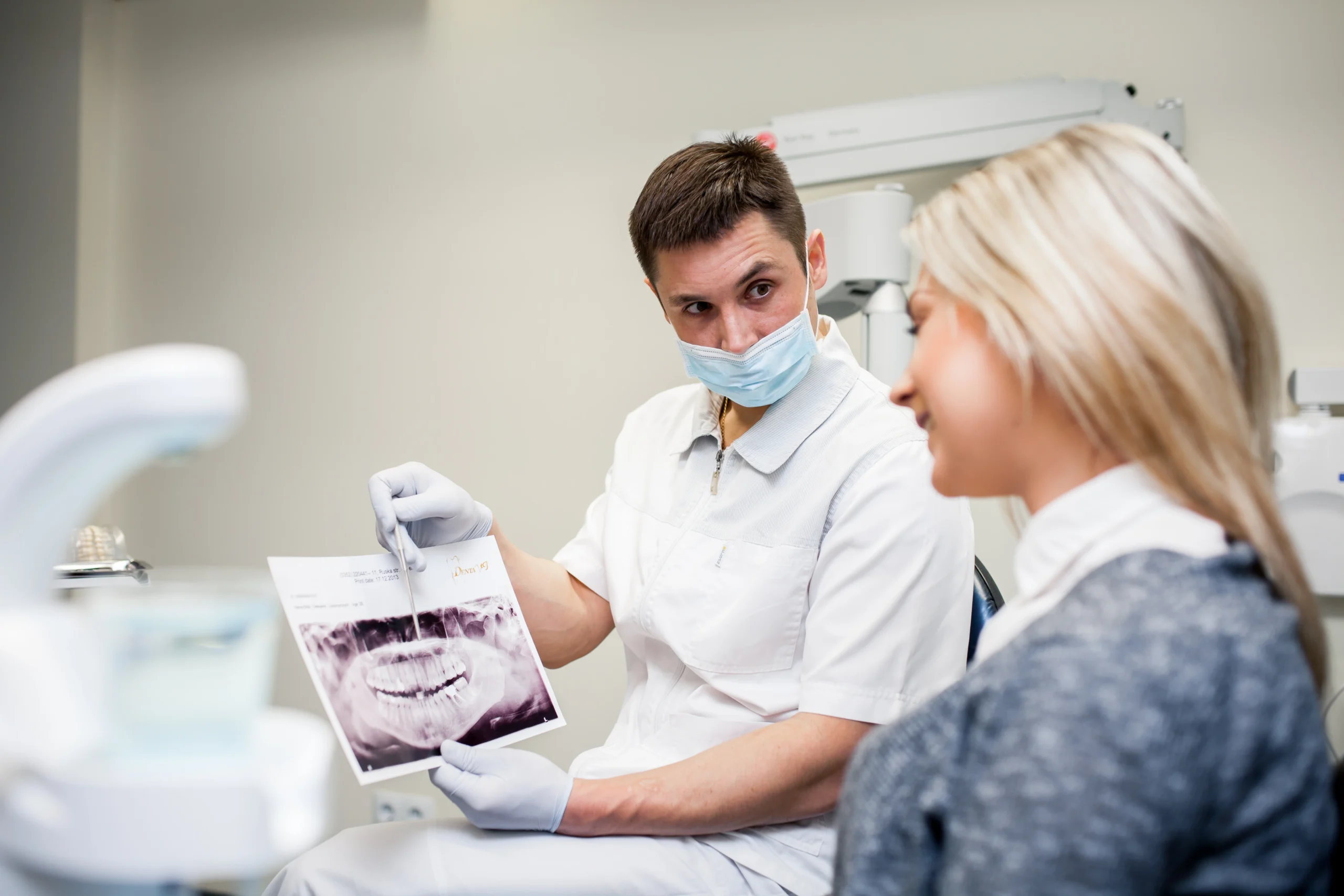
During your examination, your dentist performs several assessments to determine the tooth’s prognosis.
This typically includes:
-
A visual examination
-
Testing how the tooth responds to pressure, temperature, or gentle tapping
-
Checking for looseness or mobility
-
Assessing the health of the surrounding gums
-
Taking dental X-rays to evaluate the roots, decay, infection, and supporting bone
-
In some cases, using a 3D CBCT scan to investigate complex fractures or infections
Based on these findings, the tooth is given a prognosis: good, guarded, or poor. You’ll then be guided through the available treatment options, including the expected longevity, benefits, risks, and costs of each.
Saving a Tooth vs Replacing It
Whenever possible, preserving your natural tooth is usually the best option. A healthy natural tooth helps maintain normal chewing function, supports your bite, preserves surrounding bone, and prevents neighbouring teeth from shifting.
However, if a tooth cannot be predictably restored, replacing it with a dental implant or bridge can provide an excellent long-term solution. The goal isn’t simply to save every tooth. It’s to achieve the healthiest and most durable outcome for your entire mouth.
Is Saving a Tooth More Expensive Than Removing It?
The answer depends on the treatment required.
Saving a tooth with root canal treatment and a crown may involve a higher initial investment than removing it. However, replacing a missing tooth with a bridge or dental implant also carries significant long-term costs.
Where a tooth has a good prognosis, preserving it can often provide better long-term value than extraction and replacement. Your dentist should provide a written treatment plan and cost estimate so you can compare your options confidently.
Don’t Wait to Have a Damaged Tooth Assessed
If you have a painful, broken, cracked, or heavily decayed tooth, it’s important not to delay treatment. Dental problems rarely improve without professional care, and acting early can often make the difference between saving a tooth and losing it.
Book a dental examination to find out whether your tooth can be restored. After a thorough assessment, we’ll explain your options, discuss the expected outcomes, and help you choose the treatment that’s right for you.
We welcome patients throughout Winmalee, Springwood, and the Blue Mountains.
Frequently Asked Questions
Can a badly decayed tooth still be saved?
Is it better to save a tooth or pull it out?
Does a cracked tooth always need to be removed?
What is root canal treatment used for?
How do dentists decide whether my tooth is worth saving?
Is it ever too late to save a tooth?
