
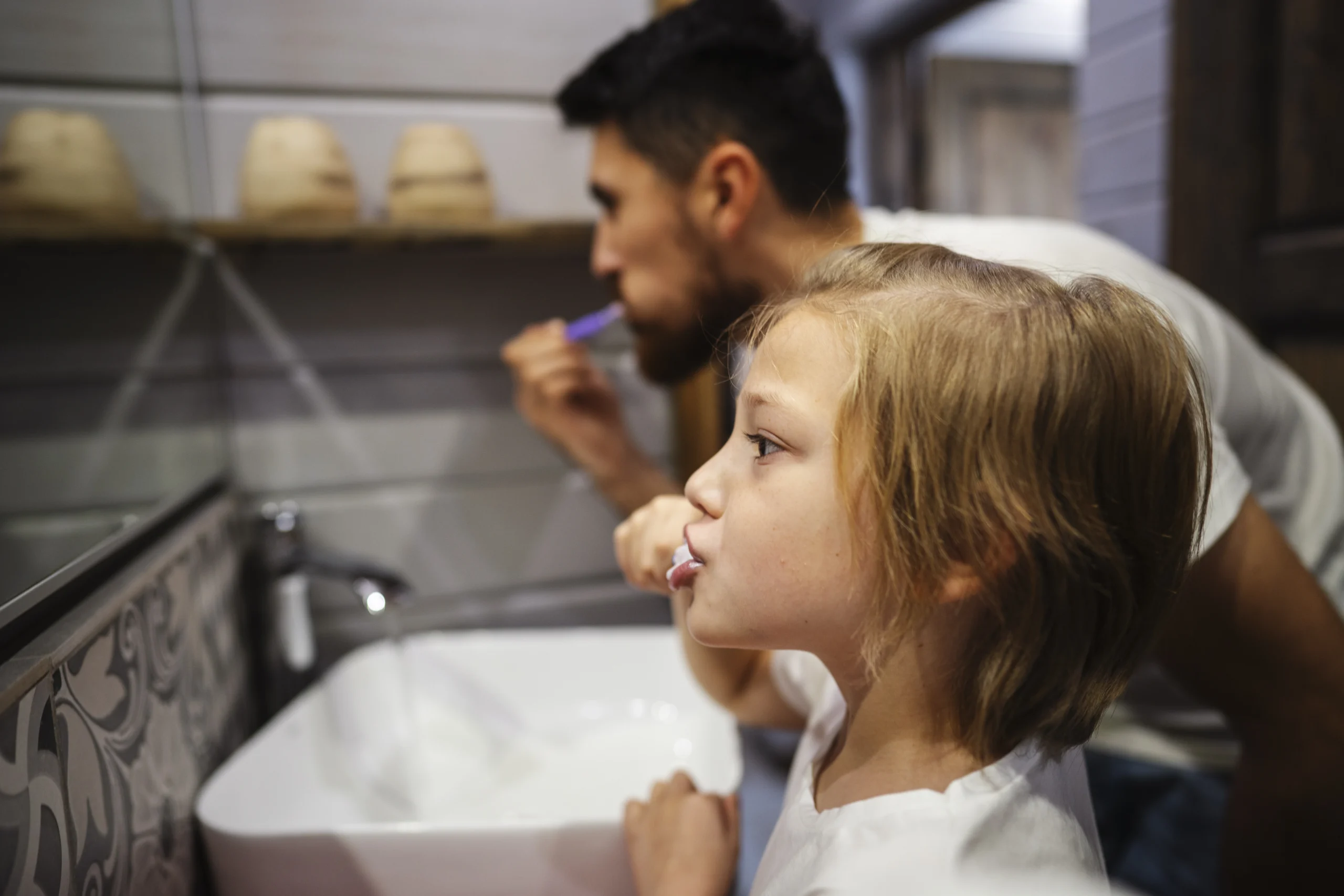
If kids toothbrushing has become a nightly battle, you’re not alone. Most brushing resistance can be improved with a predictable routine, the correct amount of fluoride toothpaste, age-appropriate supervision, and giving children small choices rather than turning brushing into a fight.
Kids toothbrushing means helping children clean their teeth effectively every day using the correct brushing technique, fluoride toothpaste, and adult supervision until they can brush thoroughly on their own.
The best way to reduce kids toothbrushing battles is to make brushing predictable, keep it positive, use age-appropriate fluoride toothpaste, supervise brushing until around age seven or eight, and give children simple choices that make them feel involved.
Here’s a playbook of approaches that work, drawn from what we see succeed with families.
Get the basics right first
Brush twice a day for two minutes, last thing before bed and one other time. Use a small soft
brush and a smear of fluoride toothpaste (rice-grain size under three years; pea-size from three
to six), and encourage spitting rather than rinsing so the fluoride keeps working. Brush all
surfaces in a gentle, systematic order so nothing is missed. Getting these fundamentals
consistent matters more than any single trick.
Effective plaque removal is more important than brushing hard. Gentle circular motions clean the teeth and gumline without damaging developing gums.
| Child’s Age | Toothpaste Amount | Adult Help Needed |
|---|---|---|
| Under 3 | Rice-grain smear | Yes |
| 3–6 years | Pea-sized | Yes |
| 7–8+ years | Pea-sized | Supervise until brushing is effective |
Give children control within limits
Power struggles ease when kids feel some ownership. Let them choose between two
toothbrushes or two flavours, pick which song plays, or decide whether they brush first and you
“finish off”, or the reverse. The deal is non-negotiable that teeth get brushed but how is open
to their input. For many children, “you do the top, I do the bottom” defuses resistance while still
getting an adult-quality clean. Let them choose the colour of their toothbrush.
Make it fun and predictable
• Use a two-minute song, sand timer or brushing app to mark the time
• Brush together so they copy you modelling is powerful
• Try a sticker chart or simple reward for a week of cooperation
• Let a favourite toy ‘have its teeth brushed’ first
• Play ‘find the hidden sugar bugs’ to make thoroughness a game
Predictable timing helps too: the same point in the bedtime routine every night reduces
negotiation, because brushing simply becomes ‘what we do next’.
How to Handle Common Kids Toothbrushing Challenges
Toddlers who clamp shut often do better lying down with their head in your lap, where you can
see and reach the teeth many find this calmer than standing at the basin. For sensory
sensitive children, experiment with a softer brush, a milder or unflavoured toothpaste, and
shorter sessions built up gradually. If brushing triggers gagging, a smaller brush head and
brushing before, not after, a meal can help. Persistence with a calm, matter-of-fact tone usually
wins out over time.
Why Daily Brushing Matters
Brushing removes plaque before it can produce acids that damage enamel and lead to tooth decay. Healthy baby teeth help children eat comfortably, speak clearly, and hold space for their adult teeth.
What to avoid
Try not to turn brushing into a long battle of wills or a punishment, which makes the next night
harder. Avoid letting a child fall asleep with milk or juice in a bottle, as this bathes the teeth in
sugar overnight. And don’t give up on the bedtime brush even when you’re exhausted that
final clean before sleep is the single most important one, because saliva flow drops overnight
and decay accelerates.
When to see the dentist
If toothbrushing continues to be stressful, our team can demonstrate simple techniques during your child’s appointment and recommend toothbrushes, toothpaste, and routines suited to their age. Families from Winmalee, Springwood, Blaxland and across the Blue Mountains are always welcome.
At Winmalee Family Smiles, we regularly coach parents through age-appropriate brushing techniques during children’s dental visits, and we’ve found that consistency and positive routines usually achieve better long-term results than forcing the issue.
FAQs
Q: How much toothpaste should my child use?
A: A rice-grain smear of fluoride toothpaste under age three, and a pea-sized amount from three
to six. Encourage spitting out rather than rinsing so the fluoride keeps protecting the teeth.
Q: At what age can kids brush their own teeth?
A: Children can start helping early, but they need an adult to brush or supervise until around
seven or eight, when their coordination is good enough to clean thoroughly on their own.
Q: How do I get a toddler who refuses to let me brush?
A: Try brushing with them lying down and their head in your lap so you can see and reach the
teeth, keep it short and calm, let them hold their own brush too, and make it part of a predictable
routine.
Q: My child hates the taste of toothpaste what can I do?
A: Switch to a milder or unflavoured children’s fluoride toothpaste and use only a small amount.
Let them choose between a couple of options so they feel some control.
Q: Is it really that important to brush baby teeth?
A: Yes. Baby teeth can decay, cause pain and infection, and they hold space for adult teeth.
Good habits and clean baby teeth set up healthier adult teeth and a lifelong routine.
Q: Should I brush before or after breakfast?
A: Either works as long as it happens, but the most important brush is the last one before bed. If
mornings are rushed, brushing before breakfast is fine.
Should I use an electric toothbrush for my child?
A: Many children enjoy electric toothbrushes because timers and gentle vibrations make brushing easier and more engaging. Choose one designed for children with a soft brush head.
