
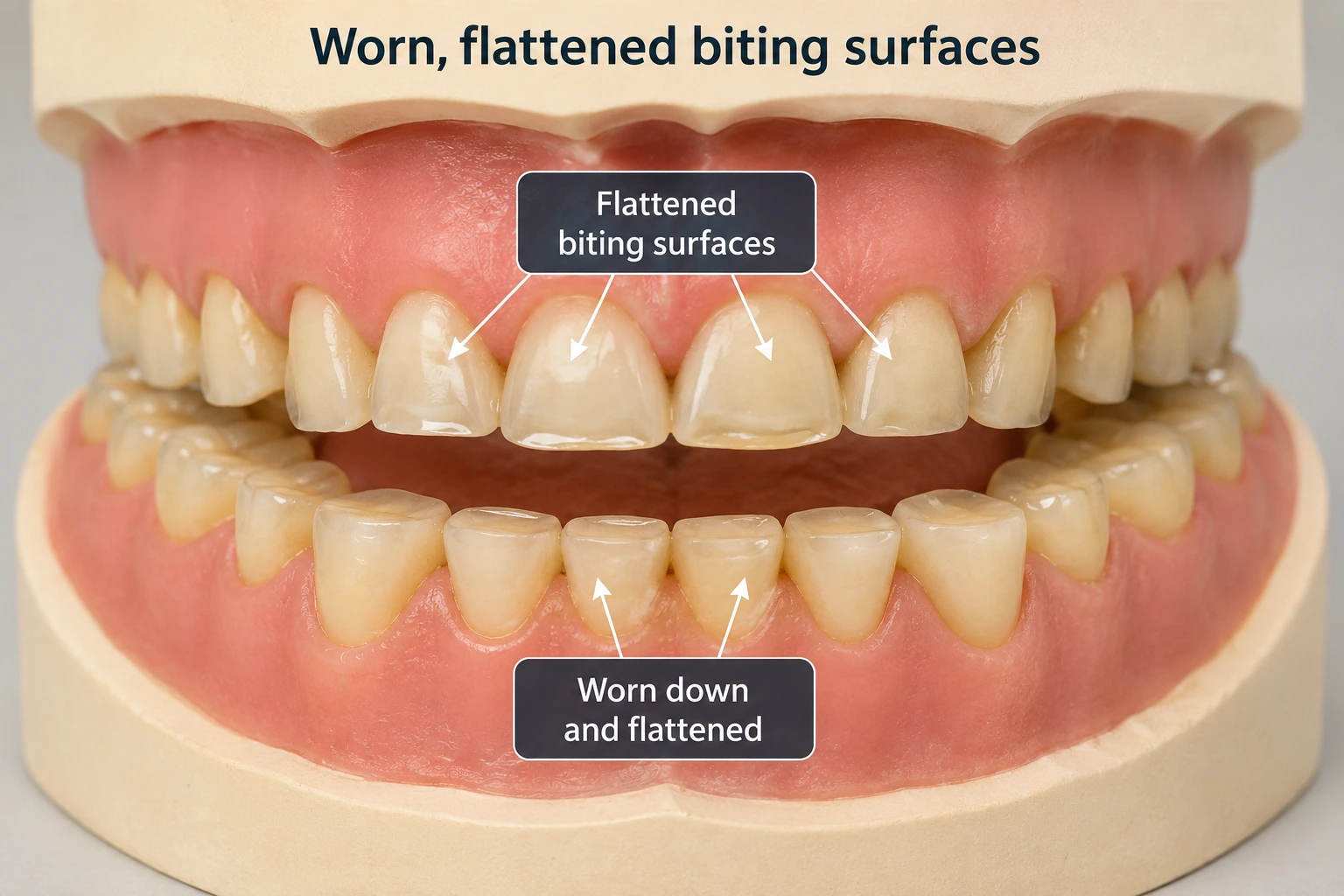
Most people don’t realise they’re teeth grinding until permanent damage has already begun. Tooth wear develops slowly over months or even years, gradually wearing away enamel without causing pain. By the time teeth look shorter, flatter or more sensitive, significant damage may already have occurred.
Once enamel is worn away it doesn’t grow back, so the goal is to recognise grinding early and
protect the teeth before the damage becomes expensive to repair.
Key Takeaway
Tooth wear caused by grinding is permanent because enamel cannot regenerate. Identifying bruxism early and protecting your teeth with a custom night guard can prevent costly restorative treatment later.
What grinding actually does to teeth
Teeth are built to handle the brief, light contact of chewing—not the sustained, heavy bite forces generated during grinding and clenching, which can be several times greater than those used for normal chewing. As tooth enamel becomes thinner, the softer dentine underneath is exposed, making teeth appear yellower and more sensitive.
What grinding can do to your teeth
- Wear away enamel
- Flatten biting surfaces
- Expose dentine
- Chip or crack teeth
- Shorten teeth over time
- Increase tooth sensitivity
- Damage fillings, crowns and veneers
The existing paragraph can remain underneath as supporting explanation. This improves readability and increases the likelihood of appearing in featured snippets.
The signs it’s happening
Changes you can see
- Teeth look shorter or flatter
- Chipped or rough edges
- Teeth becoming translucent
Changes you may feel
- Sensitivity to cold or sweets
- Morning jaw soreness
- Tension headaches
Changes others may notice
- A partner hears grinding during sleep
- Dental work repeatedly chips or wears down
Why it sneaks up on you
Most grinding happens during sleep (sleep bruxism), so you’re simply not aware of it. The change to your teeth is measured in fractions of a millimetre at a time, and because both the
upper and lower teeth wear together, the bite still feels normal even as height is lost. Many
people only realise something has changed when a tooth chips, a front edge becomes see
through, or we show them photos comparing this year’s teeth with an earlier record.
What’s driving the grinding
- Stress and anxiety: Increased muscle activity during sleep can lead to unconscious clenching and grinding.
- Sleep disorders: Sleep apnoea and disrupted sleep are commonly associated with sleep bruxism.
- Caffeine and alcohol: These can increase muscle activity or reduce sleep quality, making grinding more frequent.
- Uneven bite or missing teeth: These may place excessive force on certain teeth during clenching.
Bruxism rarely has a single cause. Stress and anxiety are common triggers, and grinding often
flares during busy or worrying periods. Disrupted sleep and snoring or sleep apnoea are
strongly linked, as the airway and jaw muscles interact overnight. Caffeine, alcohol, smoking
and some medications can increase it, and an uneven bite or missing teeth can concentrate
forces on particular teeth. Identifying the likely drivers helps us tailor both protection and, where
relevant, referral.
Grinding places repeated strain on the masseter muscles—the main muscles used for chewing—which can lead to jaw soreness, facial tension and morning headaches.
Can tooth wear from grinding be prevented?
Simple lifestyle changes may help reduce the effects of grinding:
- Reduce caffeine later in the day
- Limit alcohol before bedtime
- Improve sleep habits
- Manage stress where possible
- Avoid chewing hard objects like ice
- Attend regular dental check-ups
How we protect your teeth
The mainstay is a custom-made night guard (occlusal splint) — a precisely fitted device that
absorbs and redistributes the grinding force so it wears the guard instead of your teeth. Unlike a
soft chemist mouthguard, a custom splint fits accurately, lasts far longer and is more
comfortable to sleep in. Alongside it, we monitor wear over time with photos and measurements,
treat sensitivity from exposed dentine, and where teeth are already significantly worn we can
discuss rebuilding them. Managing stress, caffeine and sleep all support the result.
When to get assessed
Book an assessment if you’ve noticed any of the signs above, if a partner mentions night-time
grinding, or if your teeth have started feeling sensitive or looking shorter. Earlier action means
simpler, cheaper protection a night guard now is far less involved than rebuilding worn-down
teeth later. Patients across Winmalee, Springwood and the Blue Mountains are welcome to
book a grinding and tooth-wear assessment.
Q: Can worn teeth be repaired?
A: Yes. Depending on severity, worn teeth can be rebuilt with bonding, crowns or other
restorations to restore shape and function. The first priority, though, is protecting them from
further wear, usually with a custom night guard.
Q: How do I know if I grind my teeth at night?
A: Common clues are jaw soreness or headaches on waking, a partner hearing grinding,
increasing sensitivity, and flattened or chipped teeth. A dental exam can confirm the
characteristic wear patterns.
Q: Will a night guard stop the grinding?
A: A night guard doesn’t stop the grinding itself, but it protects your teeth by taking the force
instead of your enamel. Addressing stress, sleep and caffeine can help reduce how much you
grind.
Q: Is a chemist mouthguard good enough for grinding?
A: Boil-and-bite guards offer some protection but fit loosely, wear out quickly and can be
uncomfortable. A custom splint fits accurately, lasts much longer and is easier to sleep in.
Q: Does grinding cause headaches?
A: It can. Overworked jaw muscles from clenching and grinding often cause tension headaches
and facial or jaw ache, particularly in the morning. Protecting the teeth and easing the muscle
load usually helps.
Q: Should I worry about my child grinding their teeth?
A: Grinding is common in children and often settles on its own as adult teeth come through.
We’ll check for wear and other causes at their check-up, and advise if anything more is needed.
