
Braces & Clear Aligners
Orthodontics · Winmalee Village
Braces and clear aligners
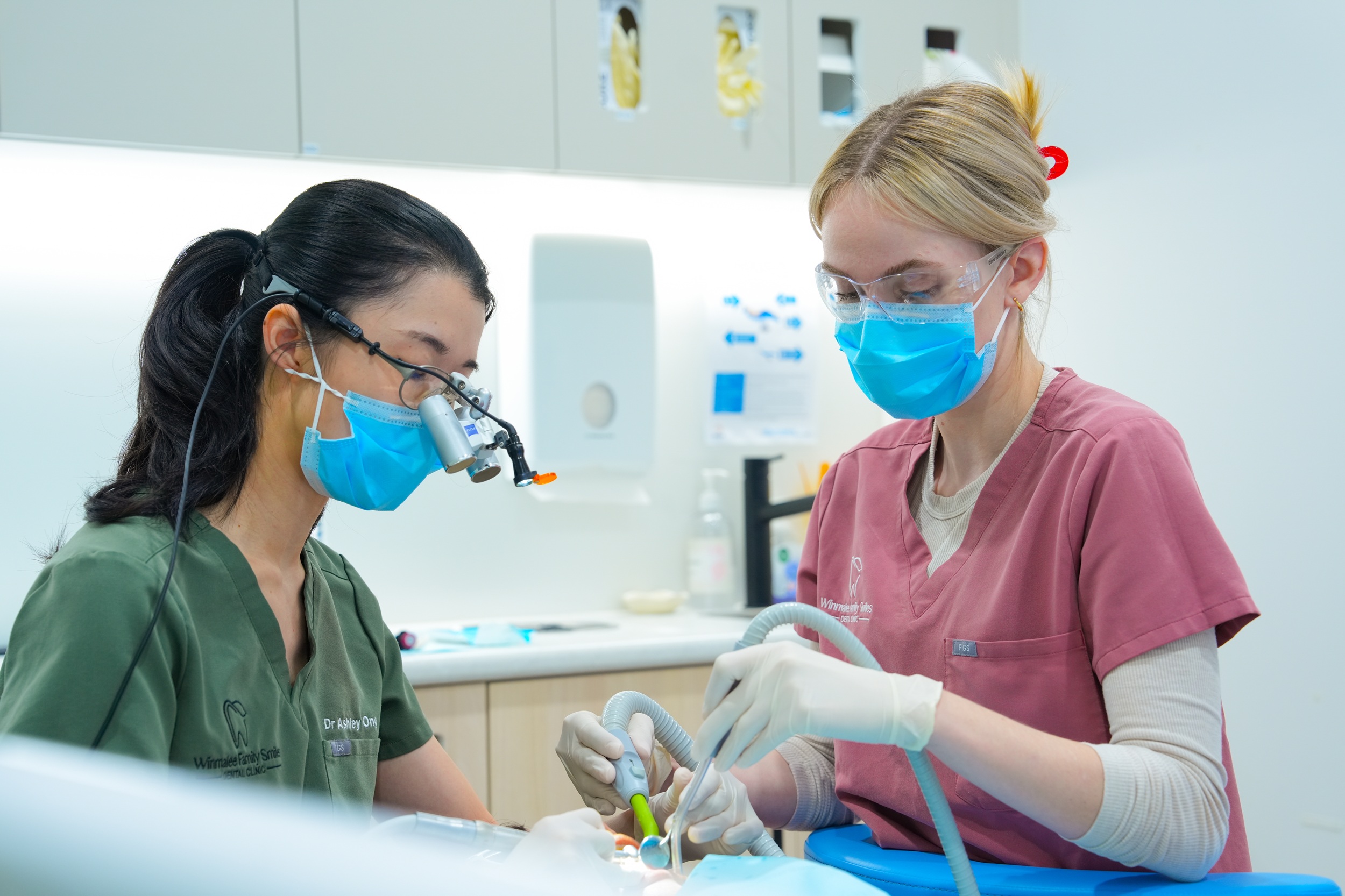
We’re general dentists, not specialist orthodontists
The dentists who provide orthodontic treatment here are general dentists with postgraduate training in orthodontics and dentofacial orthopaedics. None of us is a registered specialist orthodontist. A specialist does three more years of full-time university training after dental school and is registered with the Dental Board of Australia in that field.
We treat the cases we’re trained for. Most crowding, spacing and bite problems sit comfortably inside general practice. Some cases don’t, and when yours is one of them we’ll say so at the consultation and refer you. That consultation costs you nothing either way.
The cases we refer on include significant jaw discrepancies likely to need surgery, impacted canines needing surgical exposure, cleft and craniofacial cases, and anything we think would turn out better in specialist hands.
Ask us about our training if you want to. It’s a fair question.
Who it’s for
Children, teenagers and adults
AGES 7 TO 10
A first look
Orthodontics Australia suggests a first assessment between seven and ten. By then your child has a mix of baby and adult teeth, so we can see how the jaws are developing and what’s likely to come through. Most children we check at this age need nothing yet. We’ll tell you that, and see them again in a year.
TEENAGERS
The usual time
Once the adult teeth are in. Most full treatment runs about 18 to 24 months, depending on what’s being corrected. If your teenager won’t reliably wear something they can take out, fixed braces are the safer bet and we’ll say so rather than sell you aligners.
ADULTS
Later is still fine
Teeth move at forty much as they do at fourteen. It can take a little longer. We check your gums are healthy before starting, because moving teeth through unhealthy gums causes damage. Most of our adult patients choose aligners.
For parents
Signs worth getting checked
- Baby teeth lost early, through decay or a knock
- Snoring, or breathing through the mouth most of the time
- Teeth that don’t meet properly when they bite together
- Front teeth that stick out — these get knocked and broken playing sport
- Crowding, or teeth coming through in the wrong place
- Trouble biting or chewing
- Still sucking a thumb
- Impacted or missing teeth elsewhere in the family
Choosing
Braces or aligners?
Neither one is better. They suit different problems and different people, and the answer is usually clear once we’ve seen the scan.
| Fixed braces | Clear aligners | |
|---|---|---|
| Suits | Rotations, bigger bite corrections, and anyone who won’t wear something removable | Mild to moderate crowding and spacing, and anyone who wants it discreet |
| Visible | Yes | Barely |
| Comes out | No. For some patients that’s the point | Yes. They only work if they’re in for 20 to 22 hours a day |
| Eating | Some foods are off the list for the whole treatment | Take them out, eat, put them back |
| Cleaning | Brushing around brackets takes real effort | Brush and floss as usual |
| Visits | Every 6 to 8 weeks for an adjustment | Fewer, with trays issued in batches |
Our dentists are certified Invisalign providers. We work with more than one aligner system, and which one we suggest depends on what has to move and how far. Whichever we recommend, your written plan names the system before you agree to anything.
How it works
From first appointment to the day it comes off
1
Photographs, a 3D scan and an X-ray, then a conversation about what’s actually bothering you. We’ll tell you whether treatment is worth doing at all, what we’d suggest, and whether it’s a case we should be treating.
About an hour
2
Your options, how long it should take, the total cost and the payment schedule. For most cases we can show you a simulation of where the teeth should end up.
Within a week
3
Braces are bonded on in one appointment. Aligners start with a scan, then your first trays, with small tooth-coloured attachments bonded on where a tooth needs extra grip.
1 to 2 hours
4
Adjustments every six to eight weeks with braces. With aligners you change trays at home and come in periodically so we can check progress. Teeth feel tender for a few days after each change. That settles.
Usually 18 to 24 months
5
Braces come off, we clean and polish, and retainers go in the same day or within a few days.
Then nightly retainers
Retainers
The bit that keeps the result
For most people it means wearing one at night, indefinitely. We’d rather you knew that now than at the end. Your first set is normally part of the treatment fee. Replacements aren’t, and retainers do get lost and wear out, so budget for one eventually.
Growing jaws
Bite, breathing and how a face grows
That’s an argument for looking early. It isn’t an argument for treating early. Most children get looked at and left alone.
What it costs
One price for the whole course
Orthodontic treatment is normally quoted as a single fee covering the consultation, fitting, all your adjustments and your first retainers. You pay it off across the treatment rather than upfront, and we offer interest-free plans.
Your consultation
Free — including the scan, photographs and X-ray
Braces or clear aligners
$6,000 – $9,000 — for most cases, start to finish
What it costs
One price for the whole course
Most braces and clear aligner cases land somewhere between $6,000 and $9,000 for the full course. Shorter or simpler treatment costs less, and a complex case can sit above it. We won’t know where yours falls until we’ve had a look, which is what the free consultation is for. You’ll have the exact figure in writing before you decide anything.
Three things about health funds that catch people out
- Orthodontic cover usually has a lifetime limit rather than an annual one, commonly somewhere between $1,000 and $3,500. Once you’ve used it, it doesn’t reset.
- Most policies make you wait at least 12 months before you can claim orthodontics, and some make you wait 24.
- The Child Dental Benefits Schedule doesn’t cover orthodontics, even if your child is eligible for it. It covers check-ups, cleans, X-rays, fillings and extractions.
Bring your policy details to the consultation and we’ll work out what it’s actually worth to you before you commit.