
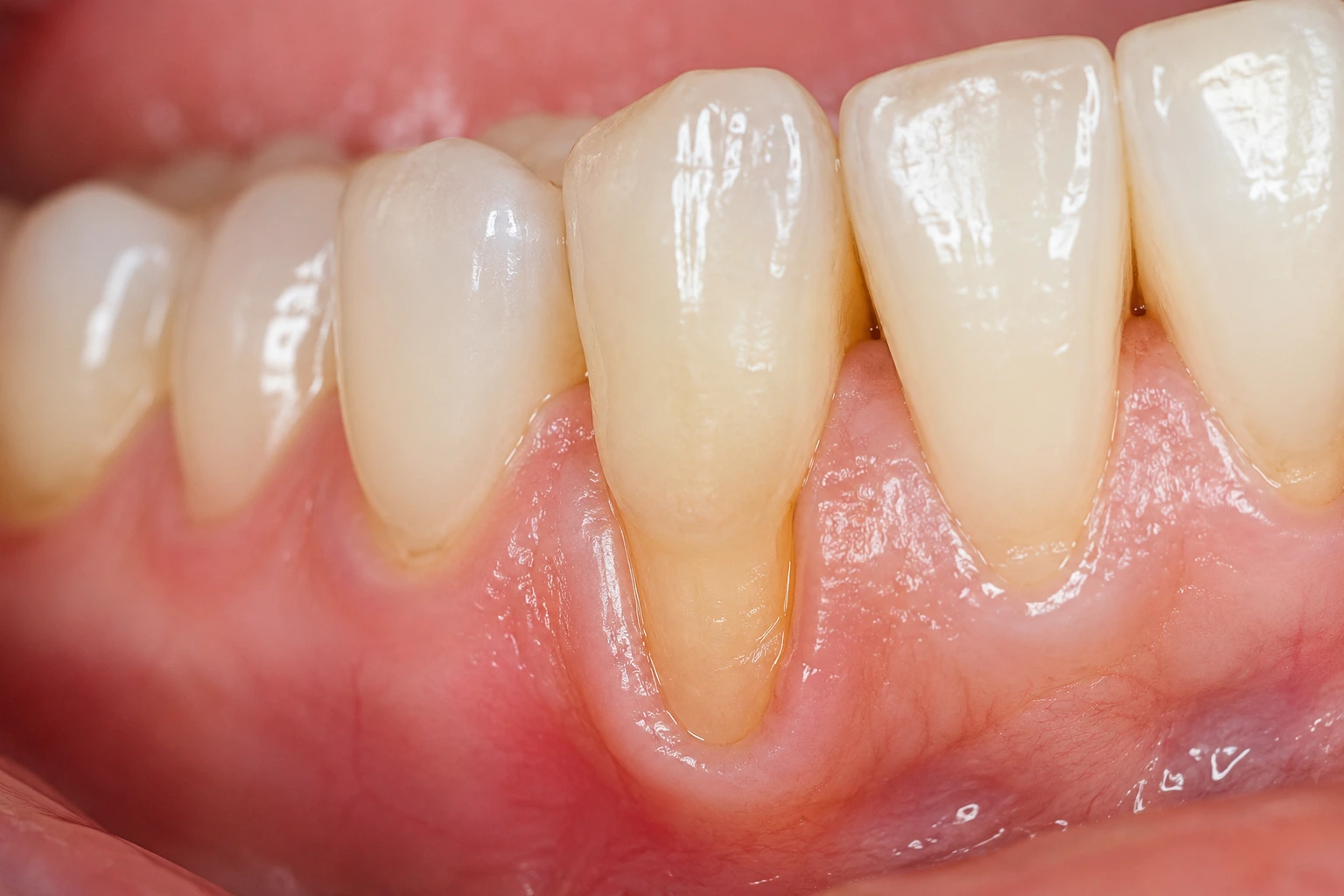
Gums recede for a handful of reasons that often overlap: brushing too hard or with a stiff brush,
gum disease, teeth grinding and clenching, the position of the teeth, and your own biology —
some people simply have thinner gum tissue. Recession exposes the softer tooth root, which is
why receding gums often feel sensitive and look longer. The key is to find the cause, because
that’s what determines how to stop it getting worse.
Once gum tissue is lost it doesn’t usually grow back on its own, so understanding the cause
early is the best way to protect your smile.
Brushing too hard
One of the most common and avoidable causes is aggressive brushing scrubbing hard, using
a medium or firm brush, or a heavy-handed back-and-forth technique. Over time this wears the
gum margin away, often on the cheek-facing surfaces and worse on one side if you favour a
hand. The fix is gentle: a soft brush, light pressure, small circular movements, and ideally an
electric brush with a pressure sensor. If you can hear or feel yourself scrubbing, ease off.
Gum disease
Periodontitis destroys the bone and tissue supporting the teeth, and as that support is lost the
gums recede. This type of recession usually comes with bleeding, swelling, bad breath or
loosening teeth. It needs professional treatment a thorough clean and, where pockets have
formed, gum therapy to halt the process. Left untreated, it’s a leading cause of tooth loss in
adults.
Grinding, clenching and bite forces
Heavy grinding and clenching (bruxism) load the teeth in ways they aren’t designed for, which
can contribute to gum recession and to small notches at the gum line called abfraction lesions.
Misaligned teeth or a heavy bite concentrate force on particular teeth, accelerating the wear.
Managing the cause often with a night guard, and sometimes by adjusting the bite
protects both the gums and the teeth.
Biology and other factors
Some people are simply more prone to recession: naturally thin gum tissue, prominent tooth
roots, a high muscle attachment (frenal pull), or orthodontic movement can all play a part.
Smoking impairs gum health and healing, and hormonal changes can increase susceptibility.
These factors don’t mean recession is inevitable they mean gentle care and regular
monitoring matter even more.
How we measure and monitor recession
Because recession creeps up slowly, the best way to catch it is measurement over time. At a
gum check we record the gum levels and pocket depths around each tooth, note where the gum
margin sits, and often take photographs so we can compare visit to visit. This shows us whether
the recession is stable or progressing, and which cause is driving it gentle scrubbing wear
looks different from disease-related loss, and grinding-related notches have their own pattern.
Tracking the numbers turns a vague worry into a clear, manageable plan.
If you’ve noticed one tooth starting to look longer than its neighbours, or a twinge of cold
sensitivity right at the gum line, that single-site change is exactly the kind of early sign worth
recording now before it spreads to the teeth around it.
What we can do about it
First we identify the cause and stop the damage: technique coaching, a soft or electric brush,
gum treatment for disease, or a night guard for grinding. For sensitivity from exposed roots we
can apply desensitising treatments or protective fillings. Where recession is significant or
progressing, a gum graft can cover exposed roots and reinforce thin tissue, and we’ll refer to a
periodontist when that’s the best option. Patients across Winmalee, Springwood and Wentworth
Falls are welcome to book a gum check so we can map exactly what’s happening and protect
what you have.
Q: Can receding gums grow back?
A: Gum tissue lost to recession doesn’t usually regrow naturally. The priority is stopping it from
worsening by treating the cause; where needed, a gum graft can cover exposed roots.
Q: Am I brushing too hard?
A: Likely yes if you use a firm brush, press hard, or wear bristles out quickly. Switch to a soft
brush, use light pressure and small circles, and consider an electric brush with a pressure
sensor.
Q: Why are my teeth sensitive where the gums have receded?
A: Recession exposes the tooth root, which lacks the protective enamel of the crown, so it
reacts to cold, sweet and brushing. Desensitising treatments and protective fillings can help.
Q: Is gum recession a sign of gum disease?
A: It can be. Recession with bleeding, swelling, bad breath or loose teeth suggests periodontitis
and needs professional treatment. Recession from overbrushing or grinding has different
causes. A check identifies which.
Q: Can a night guard help my gums?
A: If grinding or clenching is contributing to your recession and tooth-wear, a custom night guard
reduces the damaging forces and protects both gums and teeth. We can assess whether it’s
right for you.
Q: When should I see a dentist about receding gums?
A: Book a gum check if you notice longer-looking teeth, sensitivity at the gum line, or any
bleeding. Early assessment lets us find the cause and protect the tissue you still have.
